
Building trails and connecting communities
What began as an idea to create a few enjoyable walking and biking loops has grown into an ambitious vision to connect Northland communities through safe, accessible and scenic recreational trails.
At the start of this vision is the 10-kilometre Mangahahuru River Shared Trail, which will connect Hikurangi and Kamo, including approximately five kilometres through Matariki’s Glenbervie Forest. The trail is designed to offer an alternative to narrow, busy roads, allowing people to explore the region’s beautiful native bush, river landscapes and surrounding scenery.
Local resident, Leah Goodhew, has lived beside Glenbervie Forest for more than 30 years and explored the area on horseback and by bike. She recognised the potential for a connected, safe recreational trail that could be enjoyed by generations to come.
“While there are lots of running trails, there aren’t a lot of places for hikers and horse and bike riders,” says Leah.
Alongside a group of outdoor enthusiasts, Leah saw an opportunity to develop a trail suitable for walking, tramping, running, cycling and horse riding.
Beyond recreation, the project could strengthen connections between communities, create opportunities for local businesses and attract visitors to Hikurangi and the wider region.
Following discussions with Matariki Forests about the possibility of creating a trail through Glenbervie Forest, Matariki’s Northland Forester, Max Paku, helped provide access and forest maps to support the project’s development.
Armed with large aerial maps and GPS equipment, Leah and her team of ‘trailblazers’ undertook numerous treks through overgrown hillsides. Their efforts uncovered two disused tracks within Glenbervie Forest that had become overgrown.
Members from local running, biking and equestrian groups, mapped the route which weaves through native bush, follows the Mangahahuru River and skirts Glenbervie Forest, creating a unique recreational experience.
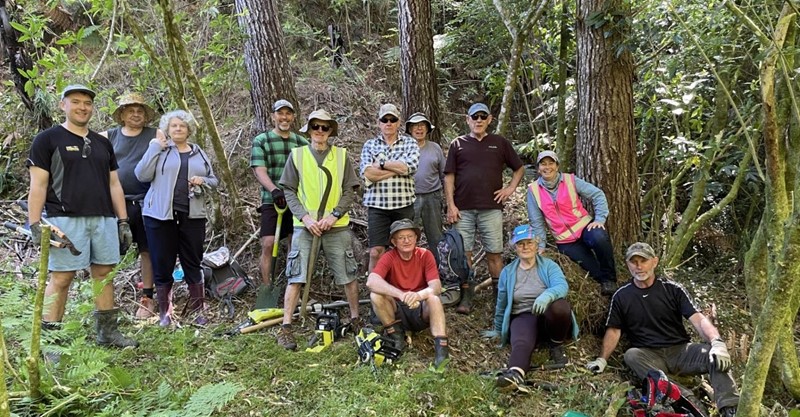
Leah said working alongside Matariki Forests, the community got together late last year, armed with chain saws, shovels, rakes and a borrowed side by side, to carry out working bees to tackle trails that had not been cleared for decades.
“The community support has been amazing. Even outside of the organised working bee days, people would just pop in and do a bit more work on their own,” says Leah.
Among the volunteers was a group of retired e-bike riders, whose experience proved invaluable.
“The group that put their hands up to help is a retired e-biking group, all in their 70s, and they have been absolute machines. Many of them are ex-foresters, farmers and builders - just the type of people we needed,” continued Leah.
The project has also received strong support from local businesses, which have generously donated materials and resources to help bring the trail to life.
The five kilometre trail through Glenbervie Forest is already open and being enjoyed by locals and visitors, with the upgrade of bridges and surfaces for bikers to be completed this summer.
Matariki’s Northland Regional Manager Will Steward said he was delighted to see this project nearing completion.
“Leah and her team have worked incredibly hard to make something that will benefit the whole community, and we’re so pleased that we could provide access and lend a hand in its development,” says Will.
The Mangahahuru River Shared Trail is part of a broader vision to create a network of recreational trails throughout the region.
Matariki Forests is also working with local community group Maungatapere Village Incorporated to develop a trail in Maungatapere Forest, with the project currently in its planning stages.
There is also an ambitious plan to create the Tutukaka Coast Walking and Cycling Trail. Led by the Bike and Hike Northland Trust, it is proposed to connect Whangārei city with Whananaki.
Matariki’s Glenbervie Forest is expected to play a crucial role in this wider connection between Whangārei and the coast. The proposed route would begin at the Whangārei Town Basin, continue through Glenbervie Forest to Scows Landing, follow the Ngunguru River, pass through Ngunguru and onto Tutukaka. From there, the trail would continue along the coast through Matapouri, Woolleys Bay and Sandy Bay, finishing at Whananaki North.
Work on the proposed trail is expected to get underway in 2027.
Together, these projects represent an exciting step towards increasing recreational opportunities for Northland where communities and visitors can enjoy the region’s natural beauty.
Above photo: Trailblazer volunteers taking a break during a working bee.