
Leading the future of Critical Risk Management
Matariki Forests is taking a major step forward in protecting its people with the development of a new Critical Risk Management Framework. This is one of the most significant health and safety initiatives the company has ever undertaken reflecting our commitment to ensuring everyone gets home safe every day.
The framework brings together operational knowledge, worker feedback, recognised international best practice, artificial intelligence and strengthened assurance processes to focus on the risks most likely to cause fatal or life-changing harm.
Matariki Forests Health and Safety Advisor, Claude Hendrikse, says the project began well before recent legislative changes reinforced the need for organisations to identify and prioritise their most critical risks.
“We recognised early that traditional hazard-based systems don’t always keep enough focus on the events that have the greatest potential to seriously harm someone,” says Hendrikse. This framework is about understanding those risks and making sure the controls that protect people are clear, practical and consistently applied.”
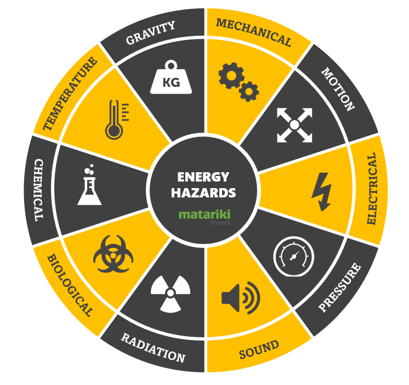
The project has drawn on internationally recognised approaches, including the International Council on Mining and Metals’ Critical Control Management model and the principles of Energy Based Safety. By understanding the energy behind serious incidents – whether released, transferred or uncontrolled – the company can better identify where robust controls are needed.
A key part of the project has been strengthening how hazards are identified in the field. Matariki Forests is using STKY (Stuff that can kill you) thinking alongside Energy Based Safety to help workers recognise the critical risks hidden within everyday tasks and providing constant reminders through a range of on-the-job resources.
The framework has been shaped through extensive consultation with staff, contractors, workers and experts. Regional workshops, structured reviews, together with contractor feedback and workforce engagement have all helped ensure the proposed critical controls are practical and effective in the field.
Artificial intelligence has also supported the project by helping analyse existing safety documentation, identify duplicate controls and highlight gaps.
“AI has helped us work smarter and faster but it hasn’t replaced human judgement,” says Hendrikse. “Every AI-assisted output has been reviewed and validated by experienced people. The real measure of success is whether the controls make sense to the people doing the work and help keep them safe.”
The next stage of the project will explore software solutions to strengthen how critical controls are scheduled, verified, monitored, reported and linked to corrective actions, creating a strong foundation for future assurance and reporting.
While consultation, refinement and field testing will continue, the goal remains simple.
“We’re not trying to build a more complicated safety system. We’re building a better one. One that helps people understand what can seriously hurt them, what protects them and how we know those protections are working,” concludes Hendrikse.